Minea earned its place as a go-to for ecommerce product and ad research, a tidy way to surface winning products, see the ads promoting them, and find suppliers. It's a solid tool, especially for dropshippers. But product research is only the first move; the teams that win also need to understand the content driving demand, and that's where many start searching for Minea alternatives.
If you want the quick answer: the best Minea alternative in 2026 is WhatWins, because it goes beyond product-and-ad lookups to combine Meta and TikTok ad-spy with organic viral intelligence across Instagram, TikTok and YouTube, plus a Shop Tracker for competitor stores. You see what's selling, what ads run it, and the organic content fueling it, all in one loop. For store-level ecommerce research, see the Shopify store spy workflow. For a side-by-side feature matrix, see WhatWins vs Minea.
What Minea actually is (and where it's strong)
Minea is a product and ad research platform built largely for ecommerce and dropshipping. Its core job is to help you find winning products and the advertising around them, then act fast. You browse products that are gaining traction, inspect the ads promoting them across platforms, and use supplier and analytics signals to decide what to test.
Here's an honest read on its strengths, because you should switch for the right reasons, not because the incumbent is "bad":
- Strong product discovery. Minea is genuinely good at surfacing trending and winning ecom products, which is the hardest part for new dropshippers.
- Ads tied to products. Seeing the ads that promote a product (across Meta, TikTok and more) connects "what's selling" to "how it's being sold."
- Ecom-native signals. Supplier links, engagement metrics and product analytics are tuned for the dropshipping workflow.
- Influencer/placement angles in some plans help connect products to the creators promoting them.
- Beginner-friendly. The product-first framing makes it approachable for people just starting in ecom.
So who outgrows it? Usually operators and brands whose question evolves from "what product should I test?" to "what is winning across my entire market, ads and organic, and how do I reproduce it and measure what it drives?" Once you're building a brand rather than flipping products, single-purpose product research starts to feel narrow.
Why people look for Minea alternatives
These aren't criticisms of Minea's craftsmanship, they're gaps between a product-research tool and a full acquisition workflow.
1. Product research is only step one
Finding a winning product is necessary but not sufficient. The brands that scale understand the content engine behind demand: the organic Reels, TikToks and Shorts that make a product feel inevitable. A tool centered on product and ad lookups doesn't fully capture the organic side that increasingly drives discovery.
2. Ads-and-products, but light on organic intelligence
Minea shows you ads and products. It's far less focused on organic virality, which post is breaking out relative to that account's own baseline, which creator format is compounding, which Short is quietly outperforming. For brand building (vs. pure dropshipping), that organic blind spot matters.
3. Pricing and plan limits
As usage grows, plan limits and add-on costs can pinch — especially for teams that want everyone in the tool. Predictable, team-friendly pricing becomes a priority once research is a whole-team activity rather than a solo founder's task.
4. Coverage and freshness
Any research tool lives or dies on how fresh and complete its index is. "This product/ad isn't in here yet" or "the TikTok side feels thin" are common reasons people add a second tool, which defeats the purpose of consolidation.
5. You want the full loop, not a lookup
Minea is excellent at find a product and its ads. But the modern workflow is Track → Analyze → Reproduce → Grow, competitor tracking, breakout alerts, store/traffic intelligence, a swipe library, and trackable links to measure what content actually drives. Stitching that together across tools is friction.
The best Minea alternatives in 2026
Each tool below gets a fair breakdown: what it is, who it's best for, its strengths and its limitations. WhatWins leads because it directly addresses the most common reasons teams move past Minea, but pick based on your real workflow.
1. WhatWins — best overall Minea alternative (ads + organic in one)
What it is: WhatWins is an all-in-one ad-spy and organic intelligence platform. It tracks competitors' live ads across Meta and TikTok and the content going viral across Instagram, TikTok and YouTube, then helps you reproduce what's winning — built around the loop Track → Analyze → Reproduce → Grow.
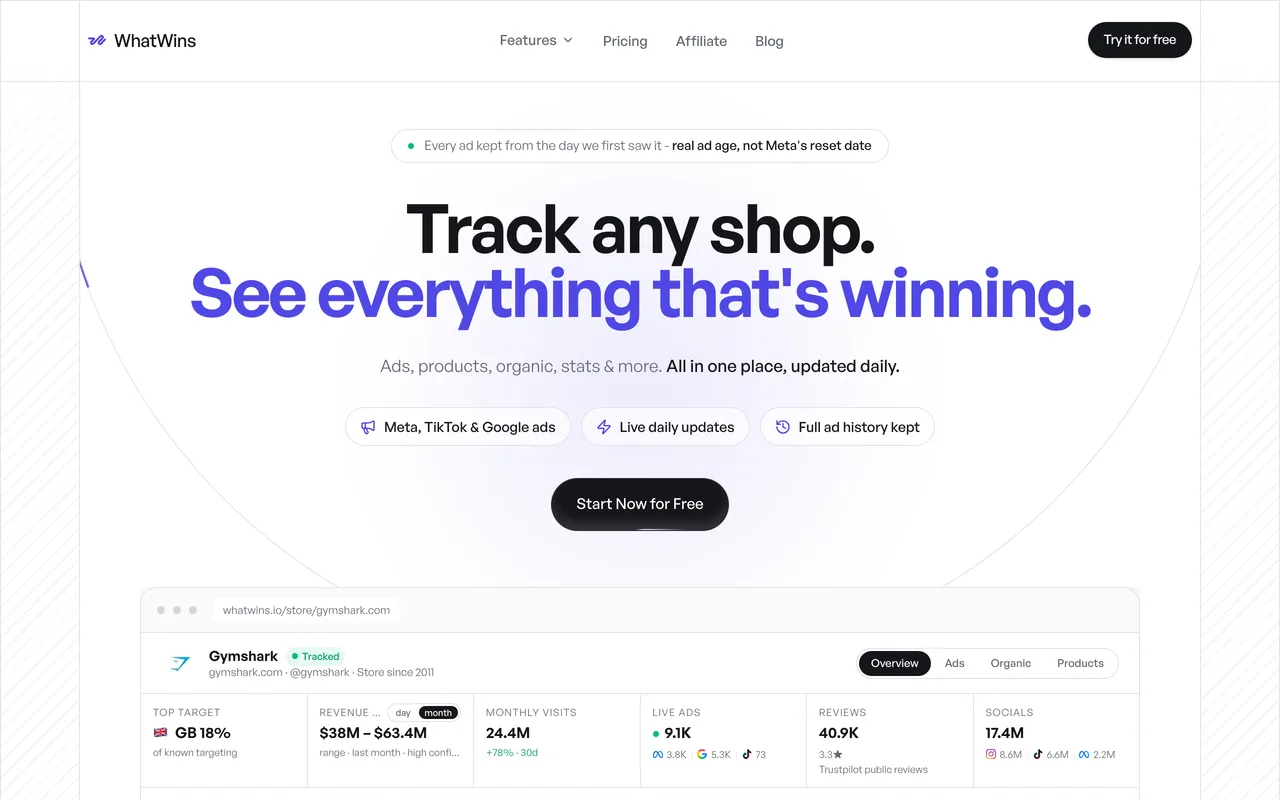
Best for: Ecom/DTC brands, agencies and creators who've outgrown pure product lookups and want paid and organic intelligence (plus store tracking) in a single tool.
Strengths:
- Both ads and organic. Where Minea centers on products and the ads around them, WhatWins adds the organic layer, the viral IG/TikTok/YouTube content driving demand, so you understand the whole engine, not just the product and its paid creatives.
- Shop Tracker. Monitor competitor stores directly — traffic, ads and spend signals, so you can tell who's actually scaling a product, not just which products exist. For ecom research, this is a major step beyond product lookups.
- Landing page and offer context. Store dossiers show the ad copy, headlines and landing-page paths behind captured creatives, so you can study how competitors sell the product, not only which product they picked.
- Viral Reel Radar + breakout alerts. WhatWins scores posts against each account's own baseline, so a true breakout (a post far outperforming that account's norm) surfaces, a sharper "what to reproduce" signal than raw view counts.
- Meta and TikTok ad-spy in one place, with competitor tracking so you can watch specific rivals over time.
- Flat team pricing, no per-seat fees. Put your whole team and freelancers in the tool without per-head costs.
- Daily refresh keeps ad and organic data current.
- Discovery, swipe library, trackable links and link-in-bio close the loop — find new angles, save what works, then measure what the content drives.
Limitations: WhatWins is broader than a dedicated dropshipping product-research tool, so if your only need is "find a trending product to flip this week" with supplier links, a pure product-research tool may feel more on-the-nose. As a newer platform, its historical ad archive is still growing relative to the oldest databases.
Pricing: $39 / $79 / $149 per month, annual billing roughly 30% off, with a free trial. Unlimited team seats at every tier.
Start a free trial, compare plans on the pricing page, or read the dedicated WhatWins vs Minea comparison.
2. Minea — best for ecom product discovery + supplier links
What it is: The tool we're comparing against — product and ad research built for ecommerce and dropshipping.
Best for: Dropshippers and early ecom operators who need to find winning products fast and see the ads (and suppliers) behind them.
Strengths: Strong product discovery, ads tied to products, ecom-native supplier and analytics signals, beginner-friendly.
Limitations: Product-and-ad first with lighter organic virality intelligence; plan limits and costs can pinch at scale; built more for "find a product" than the full Track → Analyze → Reproduce → Grow loop.
3. Sell The Trend — best all-in-one dropshipping suite
What it is: A dropshipping-focused platform combining product discovery, store and supplier tooling, and ad research.
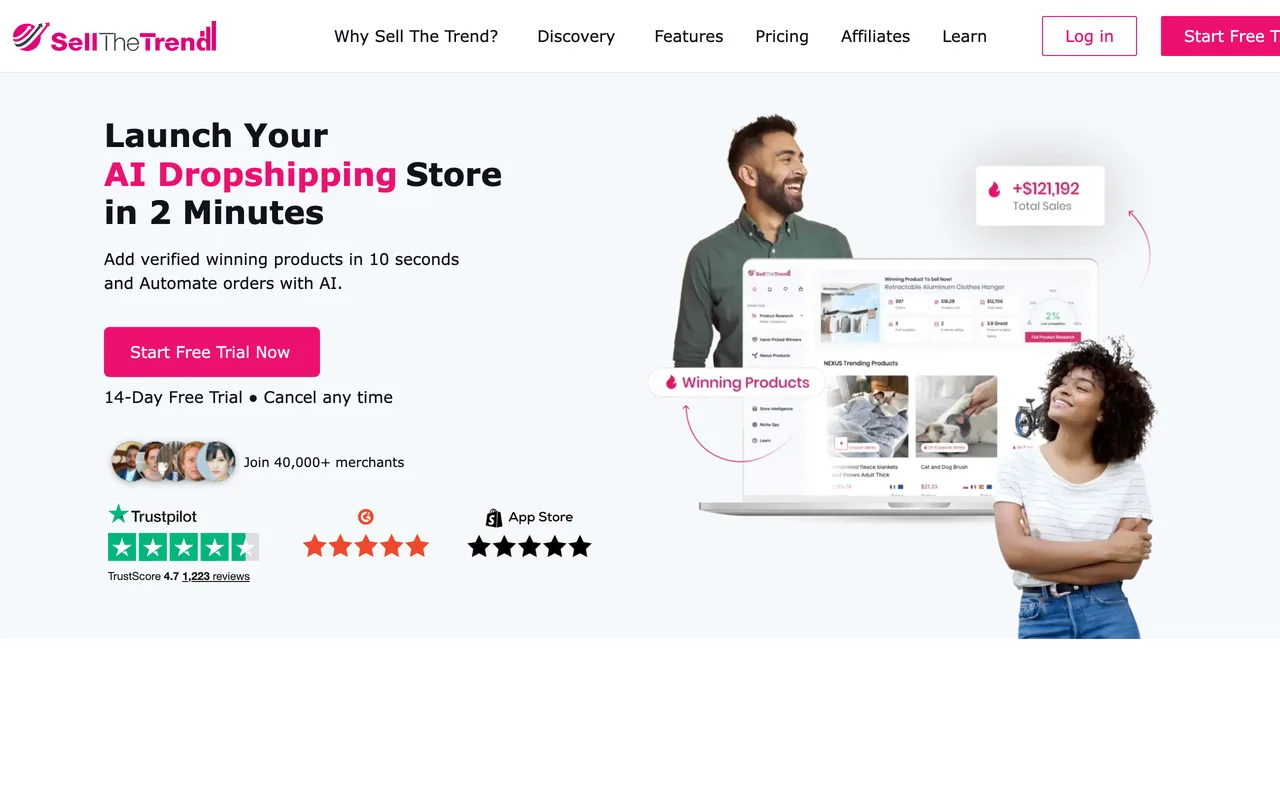
Best for: Dropshippers who want product research and store-building utilities bundled together.
Strengths: Broad ecom toolkit, product trend explorer, supplier integrations, beginner-oriented workflows.
Limitations: Dropshipping-centric, so it's less suited to brand-led growth; organic content intelligence and competitor ad depth are not its focus. See our best product research tools roundup for context.
4. AdSpy — best deep Meta ad archive
What it is: One of the longest-running ad databases, with a very large searchable index of Facebook and Instagram ads.
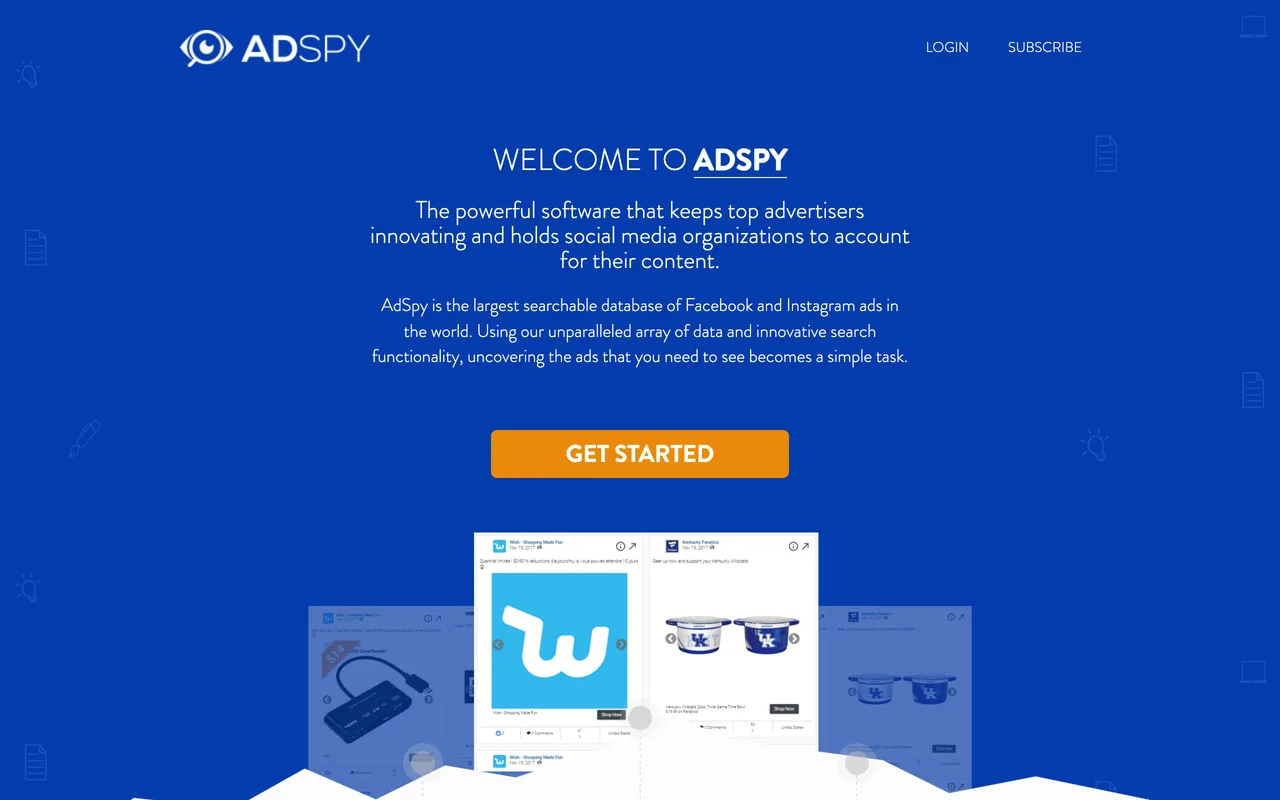
Best for: Researchers who want deep historical ad search and granular filters on Meta.
Strengths: Huge archive, advanced filtering (advertiser, text, demographics), strong retrospective research.
Limitations: Meta-centric (weaker on TikTok and organic), higher entry price, dated interface. It's an ad database, not product research or organic intelligence. More in our AdSpy alternatives guide.
5. BigSpy — best budget multi-platform ad database
What it is: A broad, lower-cost ad-spy database spanning Facebook, Instagram, TikTok, YouTube and more.
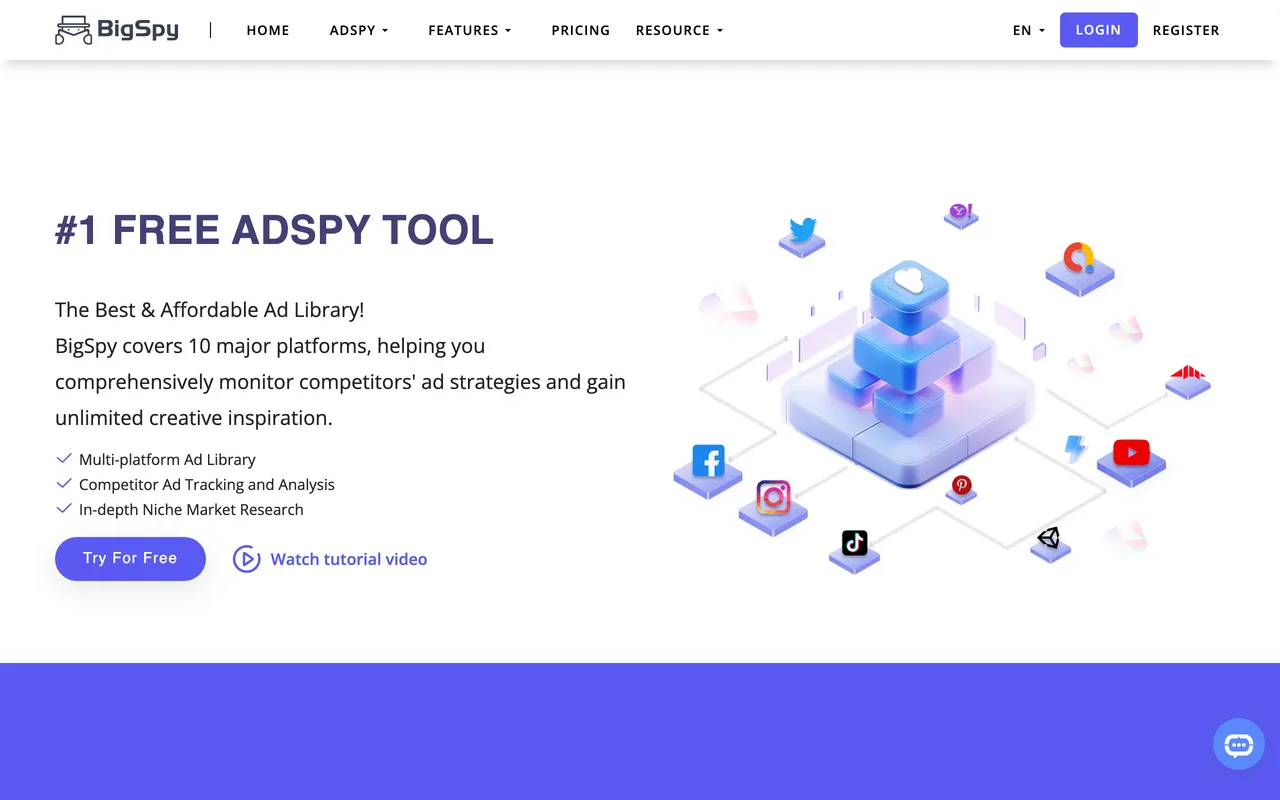
Best for: Teams that want wide ad-platform coverage at a low entry price.
Strengths: Affordable tiers, large multi-platform index, decent filtering for the money.
Limitations: Breadth over depth — freshness and accuracy can vary, and it's ad-browsing first, with limited product research, organic intelligence or analysis.
6. PiPiADS — best dedicated TikTok ad spy
What it is: A TikTok-focused ad-spy tool popular with dropshippers and ecom marketers.
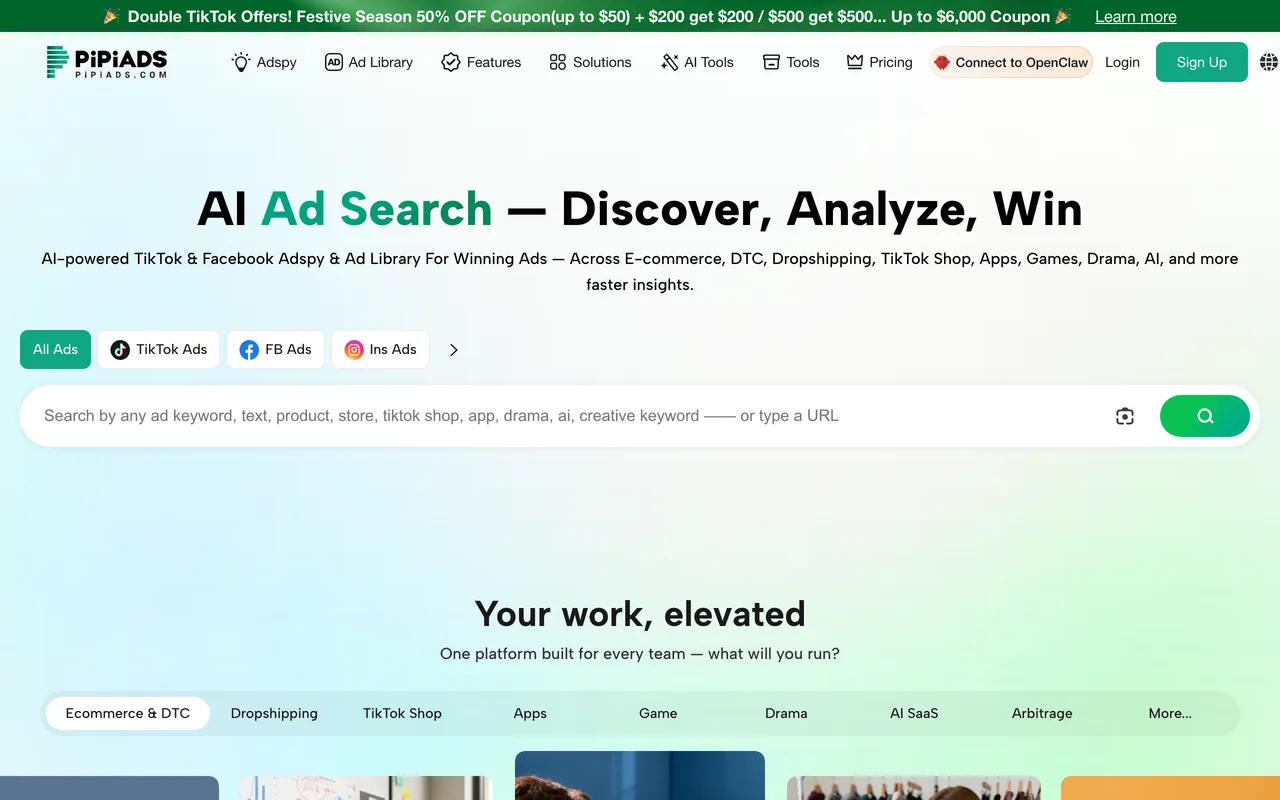
Best for: Operators whose acquisition centers on TikTok ads.
Strengths: Strong TikTok ad library, product and store-level signals tuned for ecom, useful filters for finding scaling TikTok creatives.
Limitations: Narrow by design — limited Meta coverage and little organic intelligence, so multi-channel teams end up adding tools. Our best TikTok ad spy tools guide covers this category in depth.
7. TrendTrack — best for TikTok-led trend spotting
What it is: A trend- and winning-ad tool with a strong TikTok and ecom emphasis.
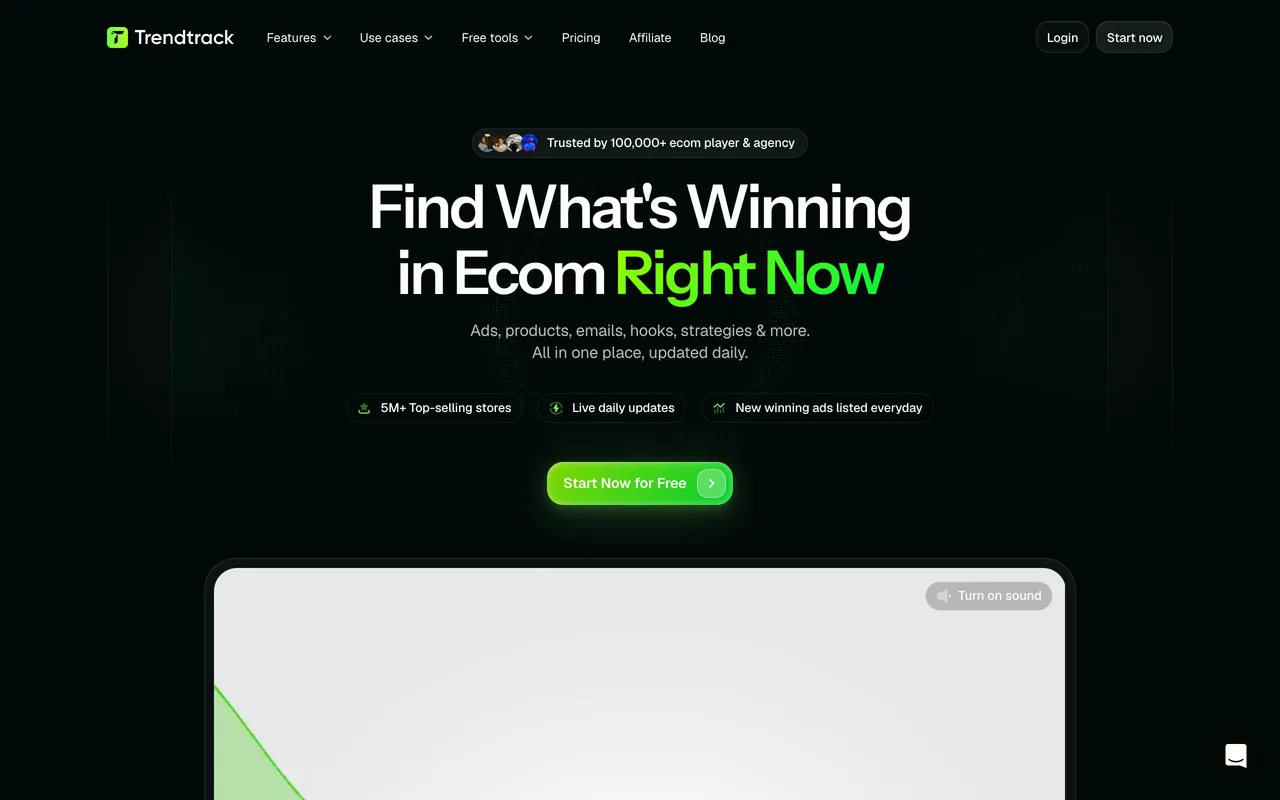
Best for: TikTok-first marketers and ecom operators chasing fast-moving trends.
Strengths: Good TikTok ad coverage, trend-oriented surfacing, useful for catching momentum early.
Limitations: Coverage outside its core focus is thinner, and it doesn't unify paid and organic the way an all-in-one platform does.
8. Dropispy — best budget ecom ad spy with a free tier
What it is: A budget-friendly ad-spy tool with an ecommerce/dropshipping lean and a free tier.
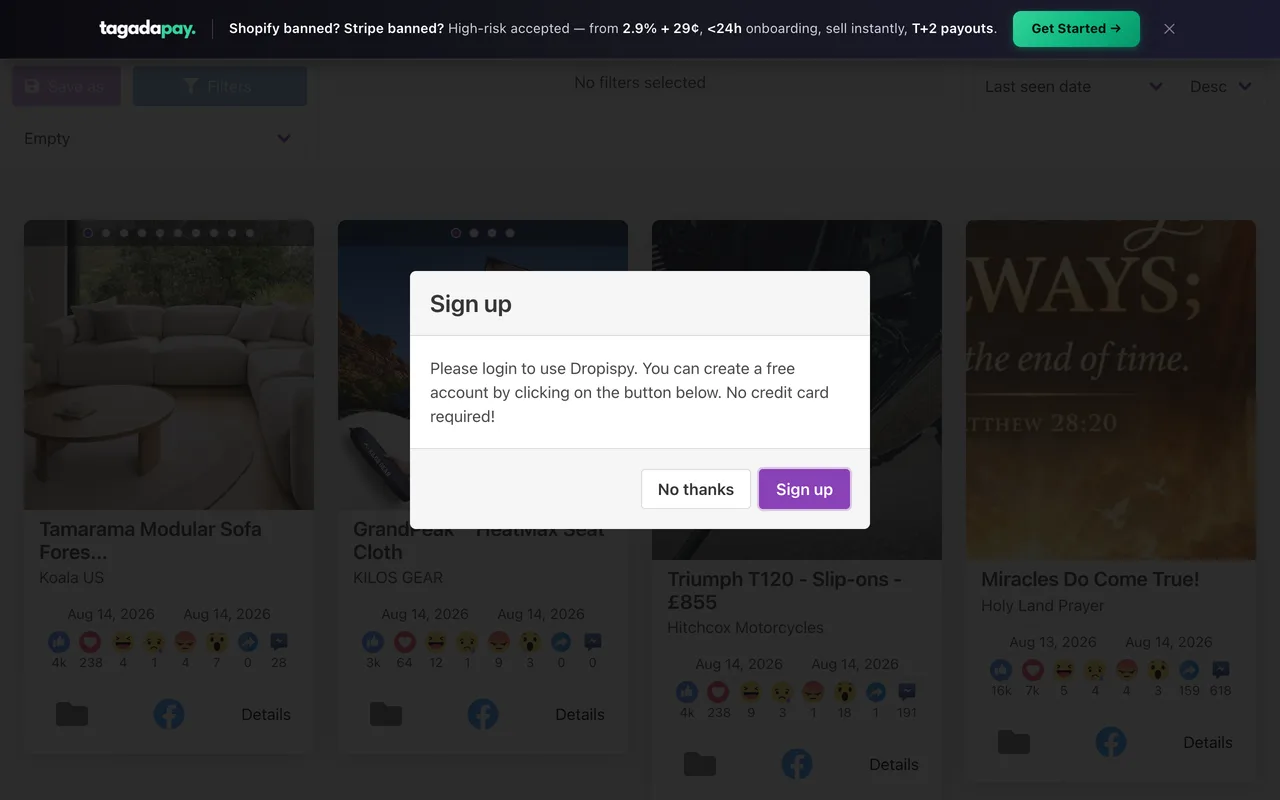
Best for: Cost-conscious dropshippers who want to test the waters before paying.
Strengths: Low cost, free tier to start, decent ecom ad coverage.
Limitations: Ad-focused with limited organic intelligence and lighter data depth/freshness than premium tools; not a full research-to-reproduce workflow.
Also worth a look: Atria
Atria is a newer, design-forward ad research tool with clean inspiration feeds that some creative-led ecom teams enjoy. It's ad-focused rather than a product-research or organic-intelligence tool, but it can complement a primary platform.
Comparison table: Minea alternatives at a glance
| Tool | Best for | Ads / Organic / Both | Starting price note |
|---|---|---|---|
| WhatWins | All-in-one ads + organic + store tracking | Both | $39/mo, ~30% off annual, free trial, unlimited seats |
| Minea | Ecom product + ad research | Ads | Plan limits; product-research focused |
| Sell The Trend | All-in-one dropshipping suite | Ads | Mid-range; dropship-centric |
| AdSpy | Deep Meta ad archive | Ads | Higher entry price |
| BigSpy | Budget multi-platform database | Ads | Low entry tiers |
| PiPiADS | Dedicated TikTok ad spy | Ads | Mid-range |
| TrendTrack | TikTok-led trend spotting | Ads | Mid-range |
| Dropispy | Budget ecom spy with free tier | Ads | Free tier + low paid plans |
Pricing and coverage change often — confirm current plans on each vendor's site. We describe pricing in relative terms rather than quoting numbers we can't guarantee.
How to pick the right Minea alternative
The best alternative is the one that answers the question you actually have. Run your shortlist through these:
1. Product research only, or the whole engine?
If you genuinely only need "find a trending product to test this week," a focused product-research tool may be enough. But if you're building a brand and need to understand the ads and organic content driving demand, and reproduce it — choose a tool that covers the full picture. This is the clearest reason to prefer WhatWins over a product-lookup tool.
2. Paid, organic, or both?
Most ecom growth in 2026 is fueled by organic content as much as paid. If you can only see ads, you're blind to the Reels, TikToks and Shorts that make products take off. Pick a tool that covers both so you're not researching with one eye closed.
3. Store/competitor intelligence
Knowing a product exists is different from knowing who's scaling it. A Shop Tracker that shows competitor store traffic, ads and spend signals tells you which products are actually working at volume, a big upgrade over product feeds alone.
4. Platform coverage
Map your channels. TikTok-led? Demand strong TikTok ad and organic coverage. Selling on Meta and TikTok? Avoid tools strong on one and weak on the other.
5. Team and seat economics
Count everyone who'll log in. Per-seat or tightly limited plans get expensive as research becomes a team sport. Flat team pricing (like WhatWins) removes the penalty for collaboration.
6. Freshness — and test it
Stale data means chasing products and ads that already cooled. Prioritize frequent (ideally daily) refresh, and during your trial, check a competitor or product you know is moving right now to confirm the index is current.
For more, see how to find winning products, the best ad spy tools roundup, the WhatWins vs Minea comparison, or, if you're moving past Minea specifically because you want the swipe-and-creative angle too, our list of Foreplay alternatives.
Frequently asked questions
Is there a cheaper Minea alternative?
Yes. WhatWins starts at $39/month (around 30% off annually) with unlimited team seats, which often works out cheaper in practice than tools with tight plan limits once your whole team is involved. Budget ad spies like Dropispy and BigSpy can be lower still, but they're ad-only, no organic intelligence, store tracking or breakout alerts. The cheapest sticker price isn't always the cheapest outcome.
For the direct breakdown, see WhatWins vs Minea.
Which Minea alternative covers TikTok ads?
Several. WhatWins covers TikTok on both fronts, competitor TikTok ads and viral TikTok organic content with breakout alerts, alongside Meta. PiPiADS and TrendTrack are strong on TikTok ads specifically but lighter on Meta and organic. If TikTok is one of several channels you care about, a tool that unifies TikTok ads, Meta ads and organic in one place saves you from stacking subscriptions.
Does a Minea alternative cover organic content, not just ads?
This is the key differentiator. Minea and most ad databases focus on ads and products. WhatWins adds organic viral intelligence across Instagram, TikTok and YouTube — surfacing posts breaking out relative to each account's own baseline, so you see the content engine behind demand, not just the product and its paid creatives. For brand-led growth, that organic layer is essential.
Is there a free option?
WhatWins offers a free trial so you can test the full loop before paying, and several competitors (like Dropispy) have limited free tiers or trials. The honest recommendation: trial two or three from your shortlist using your real products, competitors and channels, then keep the one that surfaces fresh, relevant ads and organic content, and ideally store-level signals, for your specific market.
Is Minea still worth it?
For early dropshippers focused on finding winning products fast and seeing the ads and suppliers behind them, Minea remains a capable, beginner-friendly choice. People move on mainly when their needs broaden, organic intelligence, competitor store tracking, breakout alerts and team-friendly pricing, beyond what a product-research tool is built to deliver.
The bottom line
Minea is good at the first move: finding winning products and the ads around them. But if you're building a brand and want to see the entire engine, competitor ads on Meta and TikTok, the organic content going viral on IG/TikTok/YouTube, the landing pages behind offers, and how competitor stores are scaling, you want a tool built for the whole loop. That's why WhatWins tops this list: ad-spy plus organic intelligence plus Shop Tracker, with breakout alerts and flat team pricing. Next, compare the details in WhatWins vs Minea.
Start a free trial and run it against your own niche, or compare plans on the pricing page. To go deeper on the organic side, read how to find viral TikTok content.